"Breaking Bias", Humans are Biased, AI is Worse
Apr. 17, 2025
A plethora of creative agencies have joined forces with inclusive global stock imagery company pocstock to combat Generative AI's perpetuation of harmful stereotypes, particularly those affecting marginalized demographics.
Newark, N.J.-based pocstock has spent the last two years developing a global, multicultural-focused dataset for AI. Since many datasets lack a focus on cultural nuances and representation across different communities worldwide, the unified, collaborative partnership between pocstock and the ad agencies will accurately capture unrepresented communities and re-educate AI.
Called “Breaking Bias,” the unified effort is continuing to attract agencies to host photo shoots and unleash culturally accurate images into the ecosystem. The images will be accessible to AI companies, including industry leaders like Adobe, Amazon, Canva, Google, Microsoft, OpenAI, and Shutterstock.
Creative agency INNOCEAN USA has been a marquee player helping to lead the effort.
David Mesfin, VP and creative director at INNOCEAN USA, who also founded the program said:
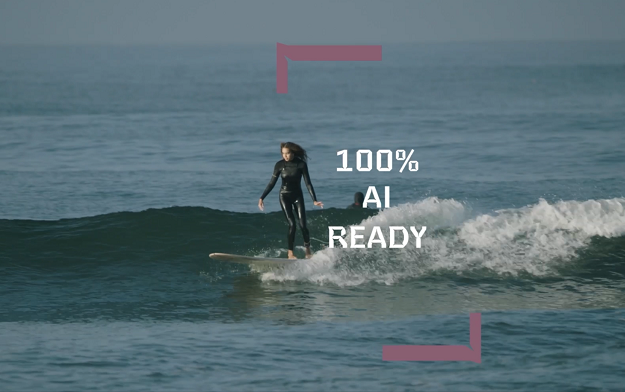
“One of the myths we often hear is that Black people don’t swim — much less surf. While working on my documentary about Black surfers, AI kept generating white surfers with darkened skin. It was evident this technology hadn’t been designed to represent us accurately. Recognizing the need to tackle AI’s bias, my teammates and I collaborated with more than a dozen agency partners to challenge AI’s bias and push for true representation.”
According to IBM, AI Bias refers to “AI systems that produce biased results that reflect and perpetuate human biases within a society, including historical and current social inequality.”
Today, more than 34 million AI images are generated each day, and by 2026, generative AI may produce up to 90% of online images. However, these models often replicate and amplify harmful stereotypes due to biased training data. Over time, this will compound societal misrepresentation, reinforcing exclusionary narratives.
One major source of bias is data collection. If the data used to train an AI algorithm is not diverse, the resulting outputs may be biased. For instance, Hispanic/Latino nurses comprise nearly 9.6% of the U.S. population but are represented in 0% of AI-generated images.
DeSean Brown, co-founder and chief relationship officer at pocstock said:
“We’re thankful for David’s vision and INNOCEAN USA’s propensity for action. We’ve sought this level of interest and engagement from companies in developing authentic and inclusive images for AI training - the industry needed a pioneer like INNOCEAN USA to lead the way”.
Related News

ROOF Studio Contributes Animation to "Villains Against Evil" a Campaign to Combat Book Bans
Conceived in partnership with INNOCEAN USA, the campaign features classic fairytale villains speaking out against an evil even greater than themselves

Innocean and Aggressive Craft Miniature World of Education for UMass Global
An impressive technical feat, the campaign features the use of volumetric capture, CG environments, and Unreal Engine

Latest News

Oct. 13, 2026
Brazilian Filmmaker Camila Cornelsen Brings Her Cinematic Eye to Picture North
A multi-faceted filmmaker, Camilà grew up with an artistic upbringing and spent years touring as lead singer of Brazilian indie band Copacabana Club

Oct. 13, 2026
Ad of the Day | Equinor Launches STEMgapet Campaign to Inspire the Next Generation of Scientists and Engineers
The storyline then brings us back to the foundational childhood moments that define who we are