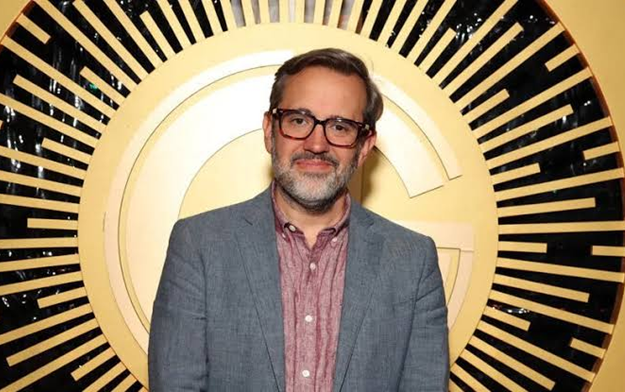
No Sushi Signs Emmy-Winning the Studio Editor Eric Kissack for Commercial Representation
Sep. 22, 2026
No Sushi, the filmmaker-first post house built around Emmy-winning editorial talent from film and television, has signed editor Eric Kissack to its roster for commercial work.
One of the most accomplished comedy editors working across film and television, Kissack’s credits include The Studio, Veep, The Good Place, Pam & Tommy, Spider-Noir, Brüno, The Dictator, Horrible Bosses 2 and Role Models. In 2025, he won the Primetime Emmy Award for Outstanding Picture Editing for his work on The Studio, followed by the 2026 ACE Eddie Award for Best Edited Comedy Series.
His signing is the latest in No Sushi’s push to bring acclaimed film and television editors into advertising, giving agencies, brands, directors and production companies access to storytellers with deep experience in performance, character, comedy and cinematic storytelling. It is part of No Sushi’s wider belief that the best advertising is entertainment, and that the craft behind great film and television can help brands make work audiences actually choose to watch.
For Kissack, that experience is particularly concentrated in comedy.
Over a career spanning more than two decades, Kissack has shaped comedy around performers including Seth Rogen, Sacha Baron Cohen, Julia Louis-Dreyfus and Kristen Bell, building an instinct for the tiny editorial decisions that separate something that is merely written to be funny from something that actually makes an audience laugh.
Alexander Jamieson, founder and managing director of No Sushi said:
“Eric has spent years solving one of the hardest problems in filmmaking: how to make something genuinely funny. That requires an incredible understanding of performance, rhythm, character and restraint. Those instincts are enormously valuable in advertising, especially as brands increasingly want work that entertains rather than simply delivers a message.”
Kissack’s route into editing began while studying film at Brown University, during a semester abroad at the Czech Film Academy in Prague. After writing and directing a short film in the city’s main train station in the middle of winter, Kissack found himself recovering from the shoot and returning to the warmth of the edit room.
The contrast stuck with him.
What had been an exhausting physical production became something different in post: a space where he could sit, think, experiment and improve the film piece by piece. By the time he left Prague, the edit room had become the place he wanted to be.
Like many editors, the early years were less straightforward. Editing depends heavily on relationships, and at the beginning of a career there are few of them to rely on. Kissack spent those years meeting filmmakers, building connections and learning how to make difficult material work.
His first major turning point came through director David Wain, who had emerged from influential sketch comedy group The State before directing cult comedy Wet Hot American Summer. Wain gave Kissack the opportunity to edit his second feature, The Ten, before bringing him from New York to Los Angeles to cut Role Models.
The film changed the trajectory of Kissack’s career.
Kissack said:
"Role Models was my first Hollywood movie and it pretty much changed my life. I learned how to build and pace big comedy set pieces, how to understand audience feedback and integrate it into the film, and how to work with the studio system. It was a real trial by fire."
From there, Kissack moved from feature to feature, developing a body of comedy work that included Brüno, The Dictator, Horrible Bosses 2, Daddy’s Home, Instant Family, Barb & Star Go to Vista Del Mar and Bottoms, before increasingly moving into television with shows including Veep, The Good Place, Pam & Tommy, Spider-Noir and The Studio.
Across all of that work, his approach begins with something deceptively simple: the script.
Kissack often starts an edit by rereading it, keeping both the jokes and the emotional arc fresh in his mind. Comedy may ultimately live or die in performance, but the editor still needs to understand what the scene was trying to achieve before deciding how to reshape it.
From there, he relies heavily on instinct.
When watching dailies for the first time, Kissack pays close attention to his own physical and emotional reactions: the moment something makes him smile, quickens his pulse, catches him by surprise or creates an emotional response. Those first reactions become markers he can return to once repeated viewing inevitably makes the material more familiar.
Kissack said:
“The thing I’m always looking for in the footage is something that moves me. That first reaction is incredibly valuable. You might not feel it the tenth or twentieth time you watch something, so I try to pay attention to what hits me on that first viewing and build around those moments.”
That sensitivity extends particularly to dialogue.
A drummer through high school and college, Kissack thinks about speech rhythmically. Years of comedy editing have made him acutely sensitive to the spacing between lines, overlaps, pauses and the exact number of frames that can make dialogue feel spontaneous rather than constructed.
He will regularly trim or add individual frames to bring dialogue into the rhythm he hears in his head, while overlapping lines to create the loose, organic energy of real conversation.
For Kissack, that craft becomes especially important in comedy, where clarity and spontaneity have to coexist.
A lesson he traces back to working on Brüno with producer Jay Roach was learning to diagnose why a joke was not landing: what information the audience was missing, where the setup had become unclear, or which performance beat needed more space.
That process has accumulated into what Kissack describes as a kind of editorial muscle memory.
Having cut thousands of comedic beats with actors across film and television, he has learned not simply how to assemble a joke, but how to troubleshoot one when it is not working.
That experience is central to what attracted No Sushi to Kissack.
Advertising increasingly asks editors to compress character, performance, story and comedy into much shorter running times. For Kissack, the duration may change, but the underlying problem does not.
Kissack said:
“In today’s world, advertising takes more and more varied forms, but the constant is still a good story or a good joke. Film and television editors have an enormous amount of experience helping story, character and comedy land.”
Kissack has already begun bringing that experience into No Sushi’s commercial work. Most recently, he edited KFC x IShowSpeed’s Hot Ranch, directed by No Sushi co-founder Daps, where his comedy instincts helped shape a creator-led performance around sincerity, misunderstanding and timing.
It is exactly the kind of work he wants to pursue more of: cinematic, performance-led advertising, particularly projects that allow comedy to collide with action, drama and character.
For No Sushi, Kissack represents another example of why the traditional distinction between narrative and commercial editorial talent is becoming increasingly difficult to defend.
Great comedy editing is fundamentally about audience attention. It is about understanding what an audience knows, what they expect, when to reveal information, when to hold on a performance and when a single frame can change the rhythm of a scene.
Those skills do not disappear when the running time becomes thirty, sixty or ninety seconds.
Jamieson added:
“Eric brings a huge amount of experience, but more importantly he brings perspective. He knows what makes a performance feel real, why a joke is working and what to do when it isn’t. That is the kind of creative partner we want No Sushi to give directors, agencies and brands access to.”
Kissack joins a No Sushi editorial roster that includes talent behind The Bear, Severance, Shōgun, Past Lives, The White Lotus, Atlanta, The Last Dance, Industry and Hacks.
His signing is the second in No Sushi’s ongoing series of editor announcements exploring not simply the credits behind its roster, but the craft, philosophy and experience each editor can bring to advertising.
Related News

Karsu Nalbantoglu Brings Documentary Instinct and Bold Visual Storytelling to Milk & Honey Films
The Los Angeles based director joins the global roster while also launching photographic series Portraits on Pico
Matthieu Elkaim Joins one of France's Most Iconic Production Companies, La Pac
Over the course of his career, he has created campaigns for an extensive roster of iconic brands, from Nike and Mercedes to Ubisoft
Landor Promotes James Withey to Global EVP, Strategy
Withey takes global leadership of Landor's strategy team, with the consultancy sharpening its offer across corporate

Latest News
Oct. 12, 2026
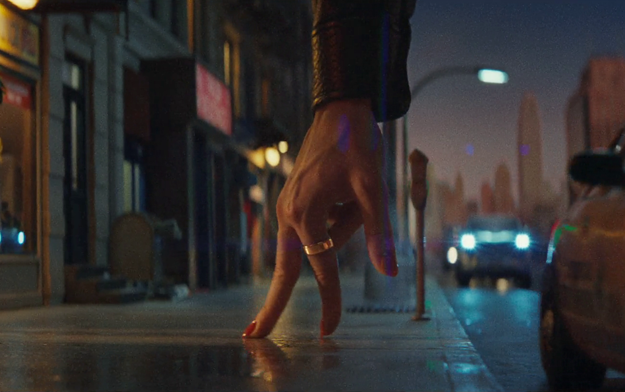
Ad of the Day | How Oura Gave Hands Humanity in Most Tactile Campaign Yet
"Wear Your Best Life" sees human-like hands strut, skate and swim through a mini model city, created by nice&frank and directed by Superprime's Sam Walker
Oct. 12, 2026
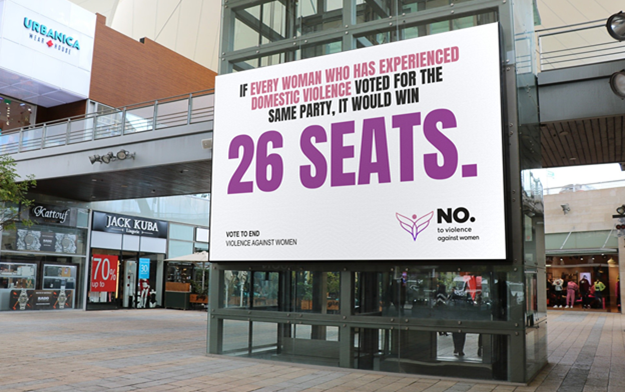
"26 Seats" Puts Domestic Violence on the Election Agenda
NO. to Violence Against Women uses the language of electoral power to make the scale of abuse impossible to overlook