The Iconic Dupe: OMHU Copied its Own Sofa
Sep. 08, 2026
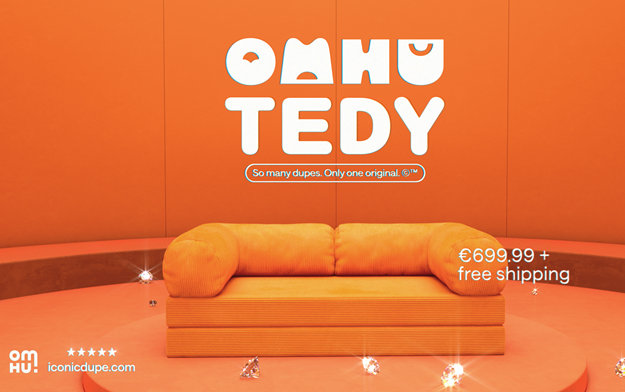
The TEDDY™ sofa by OMHU is one of the most copied sofas on the internet. There are thousands of knockoffs across online marketplaces. Different names, same shape, fraction of the price. All of them trying to look like the original.
Most brands would fight this behind closed doors or try to ignore it. Not OMHU.
Over the weekend, OMHU went all in. The Copenhagen-based furniture brand made its own dupe and sold it alongside the knockoffs.
The limited edition ‘dupe-version’ TEDY™ sofa dropped in a familiar ‘dupe-orange’ colourway. And it wasn’t sold on the OMHU website or at the usual retail price. Instead, OMHU put it on Temu, Etsy and dupe.com at a special ‘dupe price’.
Alexander Morabbi Wulsh, CMO at OMHU said:
“If anything, we see this as a compliment. Getting duped is iconic. Only icons get copied at this scale.”
Cue internet meltdown.
Most of the 100 TEDY™ sofas were gone within seconds. Less than 10 minutes later, the entire global drop had sold out. 50 across the UK and Europe. 50 across the US and Canada.
The campaign, titled The Iconic Dupe, was OMHU’s response to the wave of knockoffs that have flooded online marketplaces in recent years, leaving consumers genuinely confused between the fakes and the original.

Christine Smith, Creative Director at OMHU said:
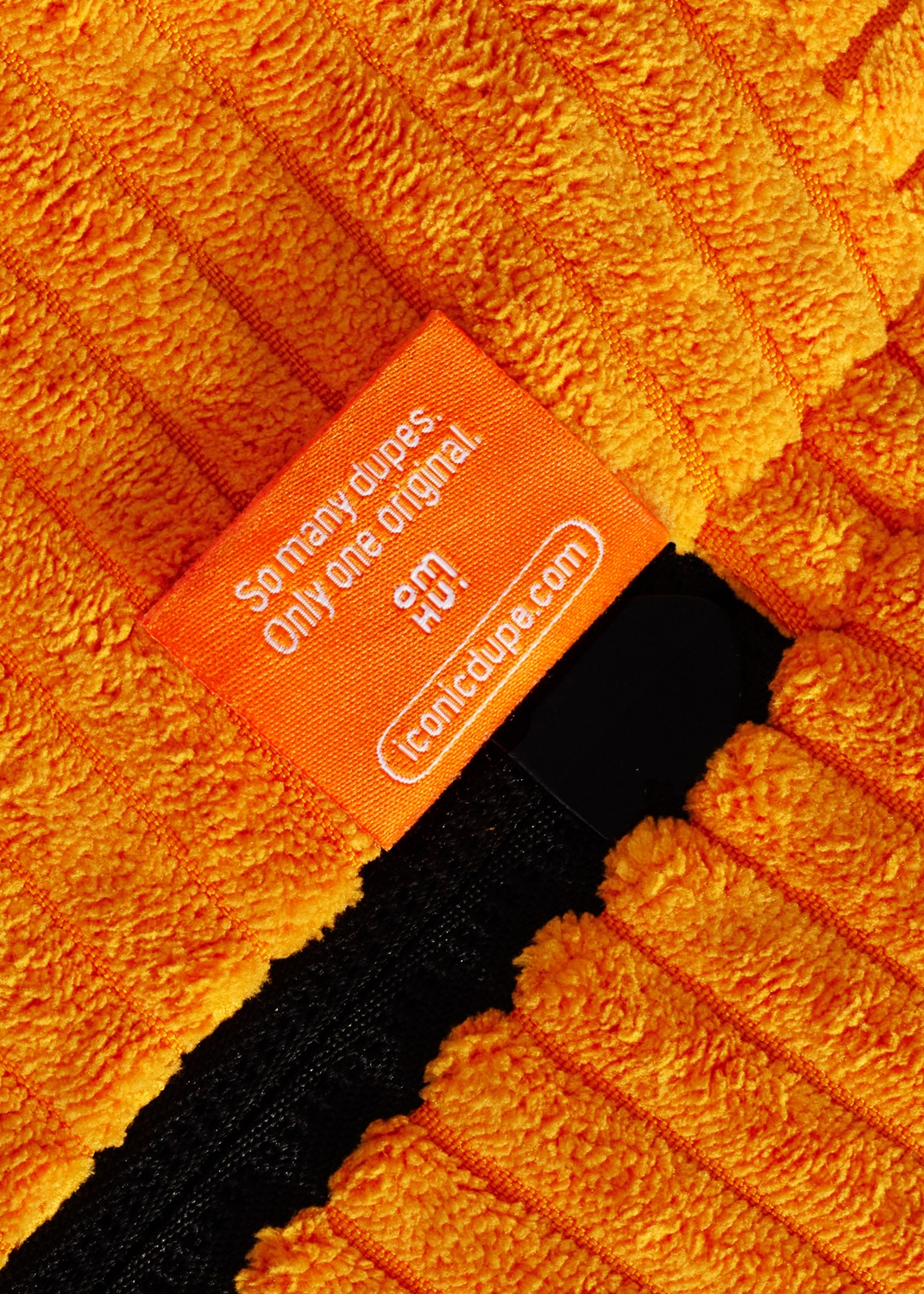
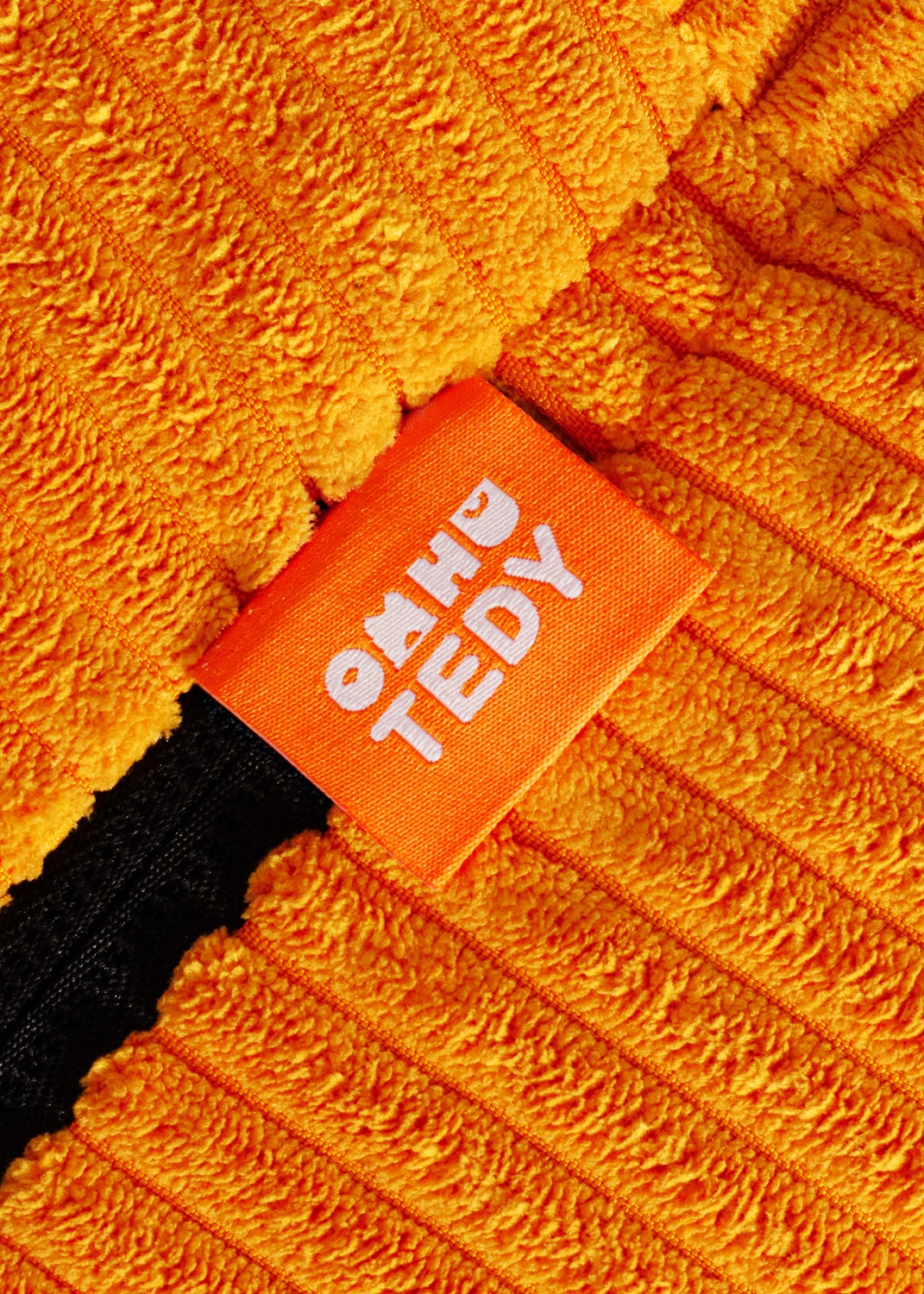
“Normally you’d just report dupes or ignore them, but we spotted a creative opportunity to create some global awareness. So we made our own dupe. Misspelled name and all. We saw a huge PR opportunity in making fun of the competition while still proving a point that we’re the OG of sofas.”
But the concept didn’t stop with the sofa. OMHU made dupe culture the entire marketing strategy, creating ‘dupefluencers’ – celebrity lookalike influencers recruited to launch its lookalike sofa. Inspired by the rise of lookalike contests, OMHU turned the trend into its own spin on influencer marketing.
OMHU also sent TEDYs to influencers who already owned knockoffs, asking them to compare OMHU’s dupe with the ones they had. The campaign took over New York with billboards (some real, some fake) and culminated in an NYC-style lookalike contest, pitting TEDY™ against the knockoffs.
The campaign did two jobs: it showcased the original, and it made the case for why it’s worth investing in. The dupe industry is huge, estimated to be worth $1.79 trillion by 2030, but the real cost isn’t always talked about – where products are made, the working conditions behind them, the materials used and the environmental impact. Cheap usually means someone or something else is paying the price.
Simon Salomonsson, CEO of OMHU said:
“Every iconic brand goes through this. This isn’t just our fight. We welcome any brand that is tired of being copied to join the conversation.”
It’s a conversation OMHU is uniquely positioned to have. The brand helped define the boneless sofa category – modular foam furniture with no legs or frame. With a market full of copies, OMHU out-duped the dupes to prove there’s only one original.
The limited edition TEDY™ was sold exclusively on Temu, Etsy and dupe.com for what OMHU called ‘the dupe price’. All 100 sofas sold out worldwide within minutes of launch.

Latest News
Sep. 08, 2026
Eight Artists Reimagine Oscar-Nominated Efthimis Filippou's Script With AI
Oscar-nominated screenwriter Efthimis Filippou, behind The Lobster, The Killing of a Sacred Deer and Kinds of Kindness, collaborates with MikeTeevee on a new experiment in AI filmmaking

Sep. 08, 2026
New Study Finds Early DTT Switch-off Could Put Radio Services at Risk
The government is currently considering two possible timelines for a managed transition to internet-only TV services – 2034 and 2044